Soulless Technology

I can't get no satisfaction — The Rolling Stones, 1965
We're uniquely obsessed with progress. No other species seems so relentlessly dissatisfied. Horses and carriages? Old. Cassette tapes? Bulky. Landlines? Not mobile enough. We've been this way since we first chipped flint into blades, tamed fire despite its danger, painted stories on cave walls while survival itself hung in the balance.
Are we alone in this compulsion? Unlikely. Across the cosmos, across deep time, surely others have walked this path. The universe is too vast, too old, for us to be unique.
Yet look at what our progress has wrought. We have the richest economy in human history1, but record depression2 and homelessness3. Modern medicine saves millions from ancient killers, while obesity4, inflammation, and heart disease run rampant. The internet connects eight billion humans, yet loneliness reaches epidemic proportions5. Real community feels like a relic.
These aren't just unfortunate side effects or growing pains. They reveal a pattern: when we build without asking why, when we innovate just to innovate or profit just to profit, our tools amplify problems rather than solve them. We've mastered how to build but forgotten to ask what's worth building.
This forgetting points to something fundamental we've lost: consciousness. From the Latin "conscientia," meaning "knowing with," consciousness implies self-awareness, wisdom, connection. Our ability to produce technology has far outpaced this deeper knowing.
Consider our relationship with Earth. We have one planet, perfectly positioned in the cosmos, neither too hot nor too cold for life to flourish. A gossamer-thin ozone layer protects us from radiation while trapping just enough heat. We're blessed with oxygen, water, and rainforests that form a living system of staggering complexity and fragility.
If honey bees vanished tomorrow, three-quarters of our food crops would lose their pollinators6. No more apples, almonds, or avocados. No coffee or chocolate. We'd survive on wheat and rice, but the diverse, nutritious foods that make life worth living would vanish. Everything hangs by such delicate threads.
Yet we poison the air, contaminate the water, bury our waste, and excavate caverns for nuclear refuse7. We treat our only home like it's disposable.
Profit today, let tomorrow's children clean up the mess. But if each generation thinks this way, eventually there's no tomorrow left. We approach our own Rubicon, a point of no return where the damage becomes irreversible. Not just for us, but for every species that shares this planet.
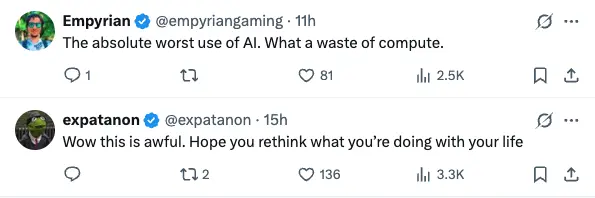
The paradoxes are starkest in our digital lives. Social media promised connection; it delivered isolation. We have thousands of "friends" but no one to call in crisis. We doom scroll for hours, losing three days each month to our screens8. Meta's latest offering, Vibes, floods feeds with AI-generated video slop designed purely to hook attention and serve ads9.
gang nobody wants this
— s (@sdw) September 25, 2025





All this engineered addiction serves one purpose: consumption.
"We buy things we don't need with money we don't have to impress people we don't like." — Fight Club
Echo chambers amplify division. Outrage travels faster than understanding.
We carry all human knowledge in our pockets, yet drown in misinformation. Conspiracy theories spread six times faster than truth. Deepfakes blur reality. Algorithms amplify extremism over wisdom. The information age has become the confusion age.
Artificial intelligence is the ultimate expression of this disconnect. We rush to automate everything, supposedly to create abundance, but really just to cut costs and maximize profits. Yet what's the endgame? When everyone uses AI, competitive advantage evaporates. Margins collapse to the cost of electricity and API fees. We're racing to the bottom, automating ourselves into irrelevance.
Helena Blavatsky warned in the 19th century of "soulless" beings, entities that mimic intelligence without consciousness. Now we hand healthcare, justice, and creativity to machines that don't know what any of it means.
And for what? This relentless efficiency doesn't create the abundance we're promised. Instead we get social credit scores that turn citizens into prisoners. Autonomous drones that make killing as easy as clicking a mouse. Deepfakes that obliterate any notion of truth. AI slop flooding every feed, every platform, optimizing for engagement while draining all meaning from human expression. Black Mirror looks quaint compared to what's already here. The dystopia isn't coming. We're building it, one algorithm at a time.
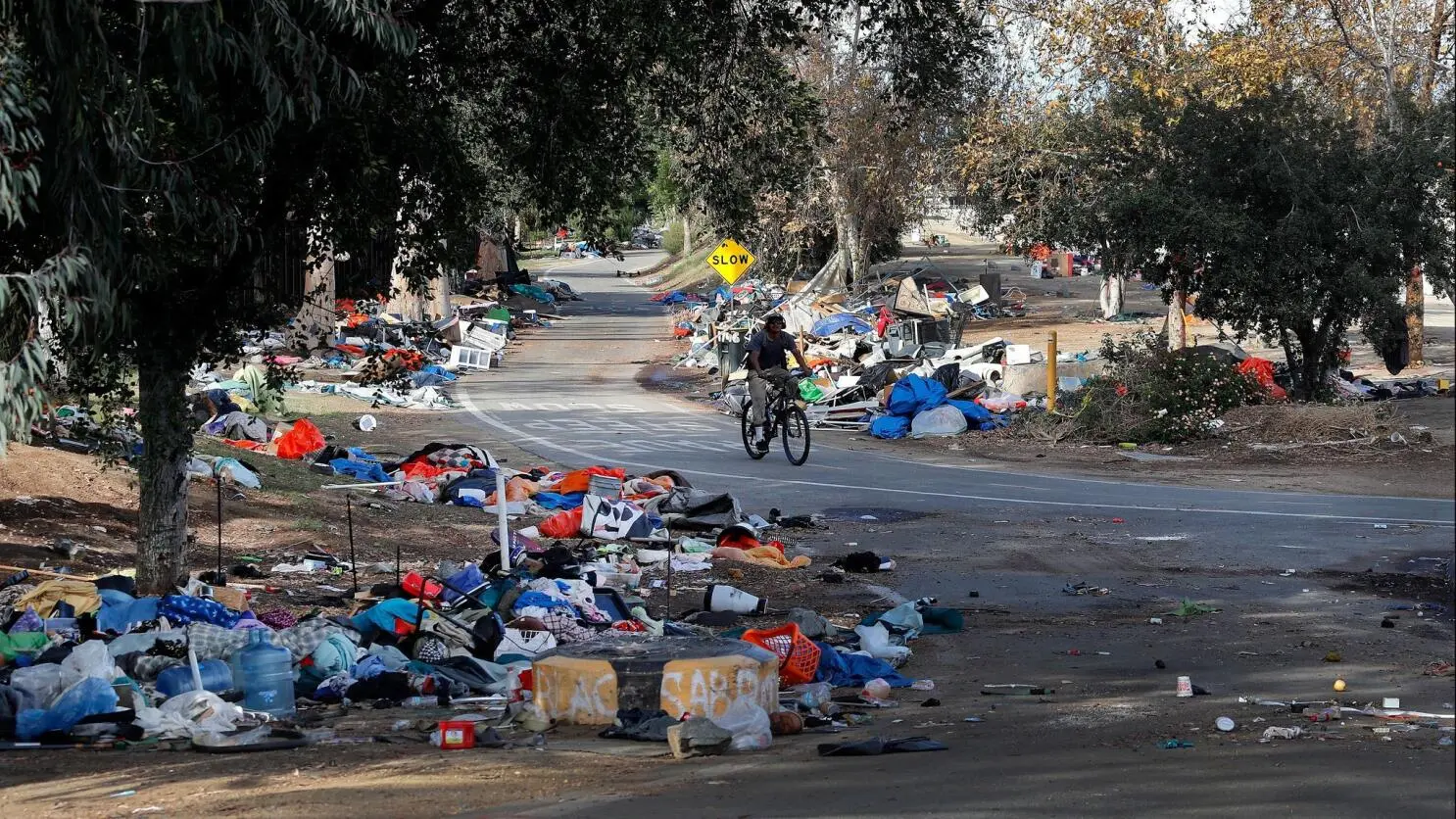
The economic paradoxes are equally stark. California's economy alone would rank 5th globally, yet tent cities sprawl beneath Silicon Valley offices where twenty-somethings make $300k. New York generates more wealth than entire nations while families sleep in subway stations. We can 3D print houses in days but "can't afford" to shelter humans. Apps deliver sushi in 15 minutes to those who pay $3000/month for studios, while food banks run empty miles away.
This isn't just market failure. It's what happens when central banks print trillions, inflating assets for those who own them while wages stagnate for everyone else. As Richard Werner documented in Princes of the Yen, credit creation concentrates wealth by design, not accident. Technology amplifies these distortions. AI won't fix what consciousness hasn't addressed: we have all the tools to solve homelessness, hunger, and basic human needs. We choose not to. We'd rather optimize ad clicks than optimize human flourishing.
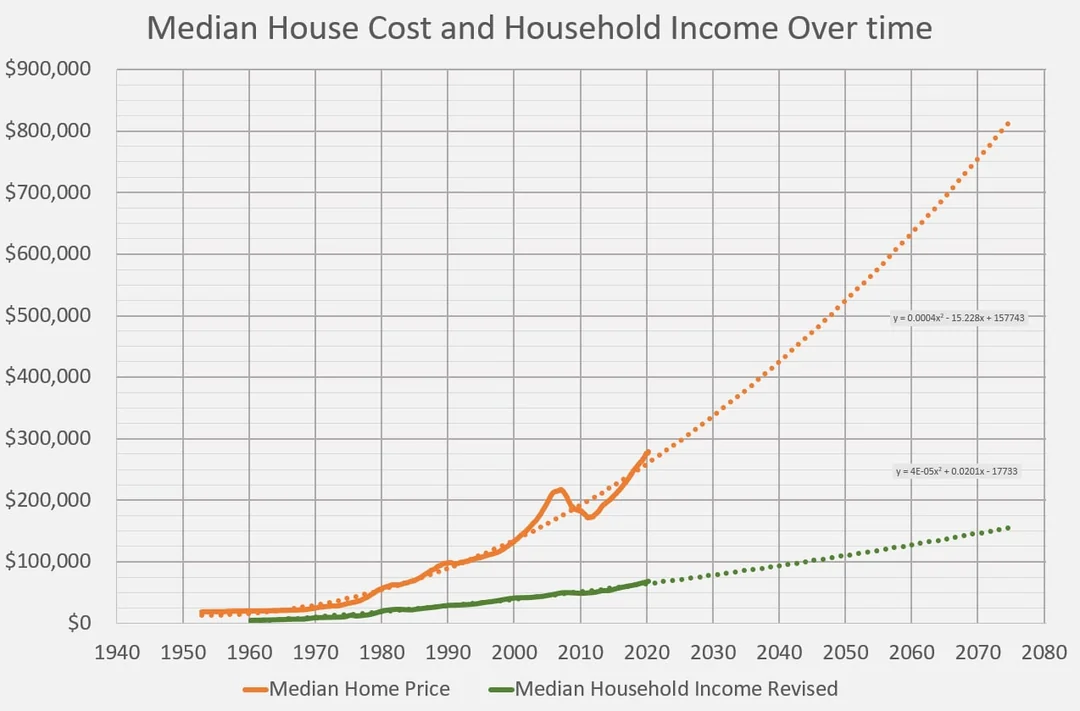
Technology doesn't solve inequality; it amplifies it. Like money revealing character rather than changing it, technology magnifies what's already there. How we build anything reveals how we build everything. Those with capital use AI to generate more wealth. Those without fall further behind. Educational technology widens the gap between connected and disconnected students. The gig economy delivers precarity disguised as flexibility. The pattern is consistent: our tools mirror our values, and our values prioritize extraction over care.
So where does it all go?
Technology and consciousness are parallel tracks of human evolution. The relationship between them determines our fate. When innovation exceeds wisdom, we get dystopia. Nuclear energy becomes nuclear weapons. Surveillance becomes oppression. Algorithms become manipulation.
When technology leads and consciousness lags, we get Orwell's 1984 as reality. China's social credit system scores humanity rather than serves it. Facial recognition turns public spaces into open-air prisons. Predictive policing criminalizes poverty. Digital currencies could become tools for total economic control. The technocratic dream of efficiency becomes a nightmare of dehumanization.
This is the path of "might makes right," where those who control the technology control everyone else. Tech billionaires speak of humanity as a problem to be solved rather than a miracle to be cherished. Universal basic income proposals sound benevolent but could become digital breadlines, keeping the masses barely sustained while a technological elite accumulates unimaginable power.
AI systems already make decisions about human lives: who gets hired, who gets loans, who gets released from prison. These systems have no genuine understanding of what it means to be human.
When technology becomes the answer to everything, it devolves into pure materialism. Soulless, mechanical, dead. Everything optimized but nothing has meaning. Infinite entertainment but no joy. Constantly connected but never truly together. We can simulate any experience but lose touch with reality itself.
But there's another path, one we keep avoiding because it requires something harder than building machines: growing up.
The answer doesn't lie in AGI or ASI or whatever acronym comes next. We keep hoping the next technological leap will magically solve problems that aren't technological at their core. Loneliness isn't a software bug. Inequality isn't a hardware limitation. Environmental collapse isn't an optimization problem.
What we need isn't more processing power but more compassion. Not faster algorithms but deeper wisdom. Not virtual connections but real community. We need to remember what every indigenous culture knew: harming the Earth harms ourselves. We are not separate from nature, we are nature. The bees dying are us dying. The oceans acidifying are our blood turning poison.
This isn't mysticism. It's the most practical truth there is. Every living system is interconnected. Damage one part, damage the whole. Yet we treat Earth like a platform to be exploited rather than a living system we're part of. We treat each other as competitors rather than collaborators in survival.
The real evolution we need isn't technological but spiritual. Not in some religious sense, but in recognizing our fundamental interconnection. When you truly understand that your wellbeing depends on everyone else's wellbeing, you stop hoarding and start sharing. When you grasp that Earth's health is your health, you stop poisoning and start healing.
This shift in consciousness could transform technology from a weapon into a gift. Imagine AI serving genuine human needs rather than manufactured desires. Automation creating leisure rather than unemployment. Networks building understanding rather than division. We have all the tools needed to create something approaching heaven on Earth. What we lack is the maturity to use them.

But maturity can't be downloaded or coded. It must be earned through facing hard truths: that our current path leads to extinction. That infinite growth on a finite planet is suicide. That no amount of technology will save us if we don't save ourselves first.
The choice is stark. Continue our adolescent fantasy that more technology equals more happiness, and watch everything collapse. Or grow up. Develop the consciousness to match our capabilities. Learn to love the world and each other before it's too late.
Time is running out. Climate tipping points approach. AI systems grow beyond our control. Social fabric tears. The question isn't whether technology will advance. It will. The question is whether we'll advance with it, or let it drag us into a soulless future where everything is optimized except what matters: love, meaning, connection, life itself.
The ultimate purpose of technology will be whatever we choose, or whatever we allow to be chosen for us. But first, we need to become conscious enough to choose wisely.
The alternative is extinction. A final lesson for a species that could build anything except wisdom.
Footnotes
- Global GDP reached $100 trillion in 2022, yet wealth inequality has reached unprecedented levels - the 10 richest countries have per-capita purchasing power of $118,000 while the 10 poorest have just $1,600. Source: IMF https://gfmag.com/data/richest-countries-in-the-world/
- 5.7% of adults globally suffer from depression, with over 1 billion people living with mental health disorders - a 25% increase since COVID-19. Source: WHO https://www.who.int/news-room/fact-sheets/detail/depression
- In the U.S. alone, 771,480 people experienced homelessness in January 2024 - the highest number since data collection began, an 18% increase from 2023. Source: HUD https://www.huduser.gov/portal/sites/default/files/pdf/2024-AHAR-Part-1.pdf
- 40.3% of U.S. adults have obesity in 2024; obesity causes 3.7 million deaths annually from chronic diseases worldwide. Sources: CDC https://www.cdc.gov/nchs/products/databriefs/db508.htm and WHO https://www.who.int/news-room/fact-sheets/detail/obesity-and-overweight
- 24% of people globally experience regular loneliness; 30% of U.S. adults feel lonely at least weekly, with young adults hit hardest at 79%. Sources: WHO https://www.who.int/teams/social-determinants-of-health/demographic-change-and-healthy-ageing/social-isolation-and-loneliness and APA https://www.psychiatry.org/news-room/news-releases/new-apa-poll-one-in-three-americans-feels-lonely-e
- 75% of major food crops depend on pollinators. Of the 100 crops that provide 90% of the world's food, 71 are pollinated by bees. Colony losses reached 62% in 2024-2025, the worst ever recorded. Sources: UN FAO https://www.fao.org/newsroom/detail/Declining-bee-populations-pose-threat-to-global-food-security-and-nutrition/en and Penn State https://www.psu.edu/impact/story/protecting-pollinators/
- Air pollution causes 8.1 million deaths annually, the second leading risk factor for death globally. 2.2 billion people lack access to safe drinking water, with 44% of wastewater returning untreated to the environment. Nuclear waste sites like Hanford contain 56 million gallons of radioactive material, costing over $100 billion to clean. Sources: State of Global Air 2024 https://www.stateofglobalair.org/resources/report/state-global-air-report-2024 and UNICEF https://www.unicef.org/press-releases/air-pollution-accounted-81-million-deaths-globally-2021-becoming-second-leading-risk
- 31% of American adults doom scroll regularly, with rates reaching 51% among Gen Z. The average person spends 6 hours daily consuming media and believes they lose 3 days monthly to scrolling. Source: 2024 Talker Research https://www.livenowfox.com/news/talker-research-media-consumption-report-2024
- Meta launched Vibes on September 25, 2025, a feed of entirely AI-generated videos. Users responded to Zuckerberg's announcement with "gang nobody wants this" and "Bro's posting ai slop on his own app." Source: Meta https://about.fb.com/news/2025/09/introducing-vibes-ai-videos/